midway survey
performance & in process essay, 2025
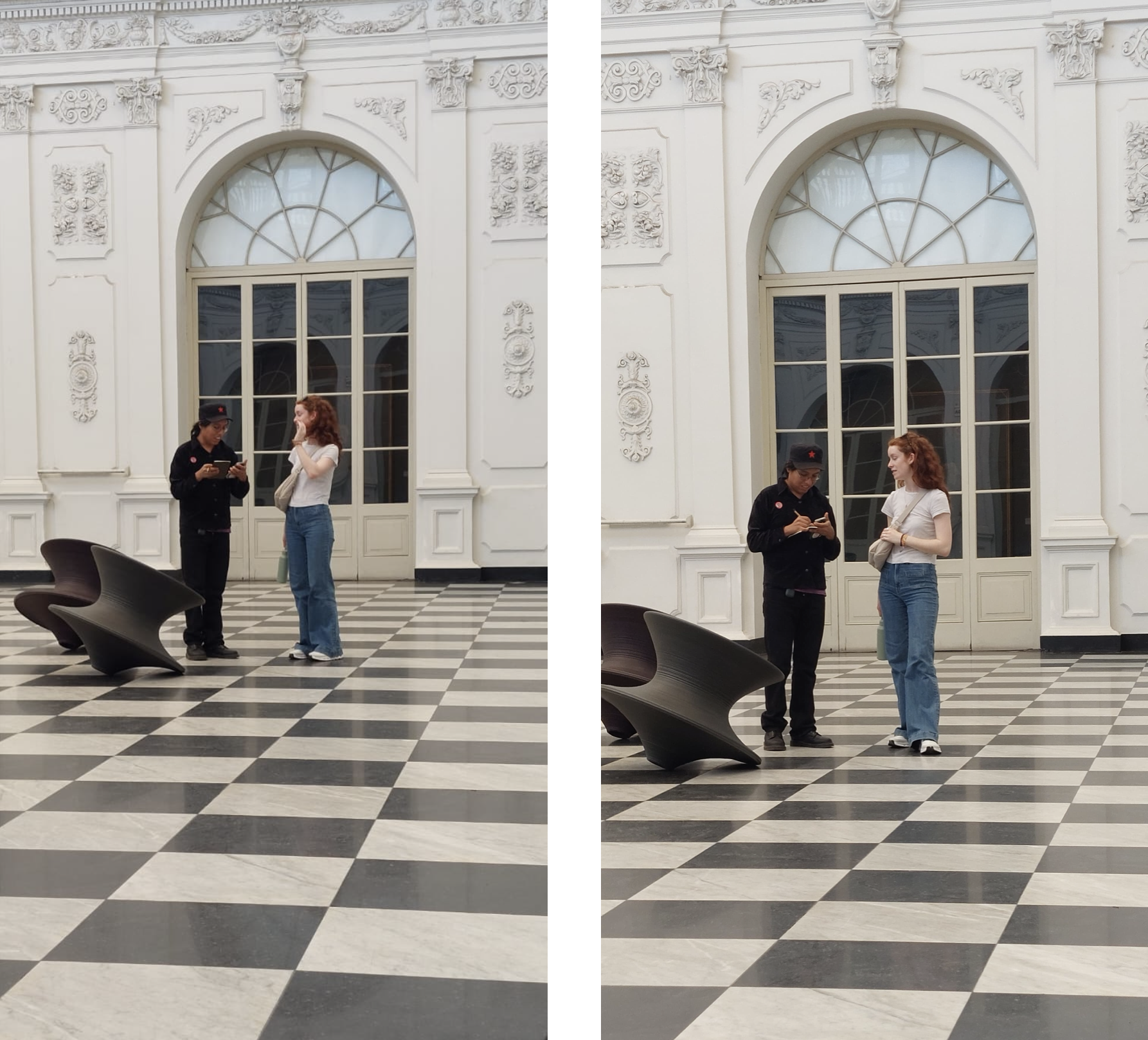
Between May and July 2025, I developed Encuesta a medio camino (Midway Survey), a performative exercise of institutional infiltration at the Museo de Arte de Lima (MALI), carried out within the framework of Non-nente: A Dream for an Indigenous Nation, an exhibition by the Shipibo-Konibo artist Sara Flores. The action consisted of administering a series of surveys to museum visitors in order to investigate how the artist’s proposal for Indigenous territorial self-determination was being interpreted from within the museum space.
The performance sought to trouble the languages of social research and the institutional devices of cultural representation, interrogating the mediations through which “the Indigenous” is translated inside the museum. One of the central sections of the survey proposed a comparative exercise between Sara Flores’s portrait for the House of Dior and the well-known image of Comandanta Ramona of the EZLN. Through this comparison, I aimed to examine how the Indigenous female body was being read, perceived, and accepted or rejected in terms of sovereignty and resistance within the museum.
The questionnaire was designed in dialogue with the artificial intelligence software ChatGPT, with the aim of revealing how the algorithms of this culturally designated “intelligent” technology assimilate and operationalize identity politics within logics of productivity and progress. Through this process, I realized that even my attempt at critique reproduced structures of classification and distance. For this reason, I decided to leave the research unfinished, transforming its interruption into a gesture of epistemological resistance against the modern pretension of totality and knowledge mastery.
This process is currently unfolding into a written essay that analyzes the various reactions to Sara Flores’s exhibition and her recent selection to represent Peru at the 61st Venice Biennale (2026). The essay examines how modern-colonial technologies of development operate—at aesthetic, ethical, and political levels—in the encounter/collision between worlds, and how the racializing logics of the Peruvian nation-state have been historically structured upon the rhetoric of mestizaje.
The title of the performance is inspired by what decolonial feminist Yuderkys Espinoza Miñoso calls “worlds halfway through.”
CHRIS LUZA - PERÚ. - 2025